Have you ever wondered whether cleaning your kitchen counters or bathroom surfaces is enough to keep your home hygienic? 🏡 Many people use the terms *cleaning, sanitizing, and disinfecting* interchangeably, but each process serves a different purpose.
Understanding these differences can help you choose the right cleaning methods and maintain a cleaner, more comfortable home.
At **Stress-Free Maids**, we believe that knowing how to care for your home properly is an important step toward enjoying a cleaner, more peaceful living space. ✨
## 🧹 1. What Is Cleaning?
Cleaning removes dirt, dust, grease, crumbs, spills, and other debris from surfaces. It usually involves water, soap or detergent, and physical action, such as wiping, scrubbing, or vacuuming.
Although cleaning removes many germs, it does not necessarily kill them.
**Examples of everyday cleaning include:**
* 🪑 Dusting furniture, shelves, and baseboards.
* 🍽️ Wiping kitchen countertops and cabinet fronts.
* 🚿 Scrubbing bathroom sinks, showers, and tubs.
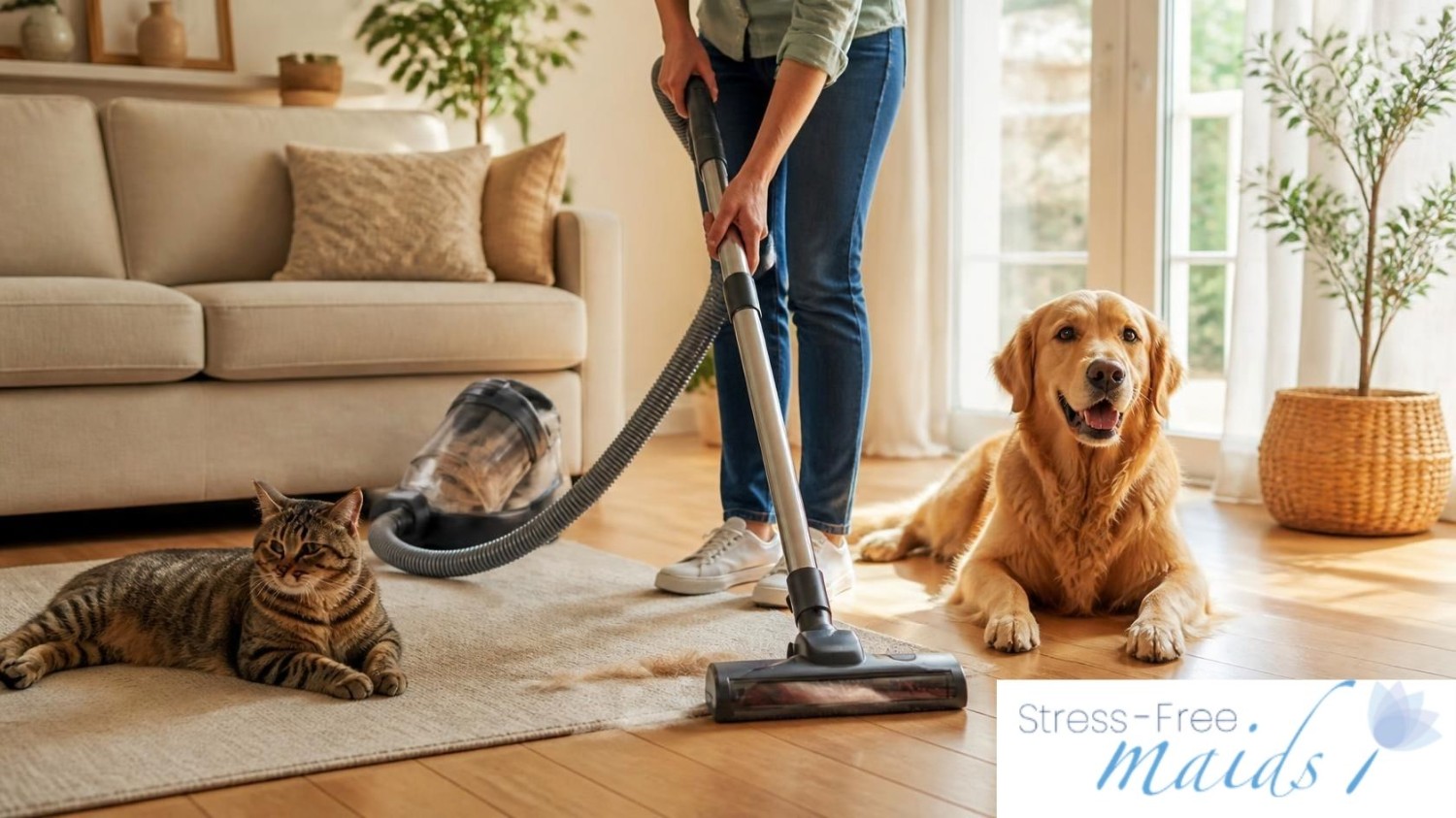
* 🧹 Vacuuming carpets and rugs.
* 🪣 Mopping floors to remove dirt and footprints.
Regular cleaning helps prevent dirt and grime from building up and prepares surfaces for sanitizing or disinfecting when necessary.
## 🫧 2. What Is Sanitizing?
Sanitizing reduces the number of germs on a surface to a level considered acceptable under applicable public health standards. It can involve approved chemical products or heat for suitable items.
Sanitizing is especially relevant to certain food-contact surfaces and kitchen equipment.
**When might sanitizing be useful?**
* 🍎 On properly cleaned food-preparation surfaces when appropriate.
* 🍴 On suitable kitchen utensils and food-contact equipment.
* 🥣 On surfaces where product directions or public health guidance recommend sanitizing.
Always check the product label to make sure it is approved for the intended surface and use. Some products require a specific contact time to work effectively.
## 🦠 3. What Is Disinfecting?
Disinfecting uses an appropriate chemical product to kill or inactivate specified germs on compatible surfaces.
It can be particularly useful when someone in the household has been sick or when additional germ control is needed.
**Common examples include:**
* 🚪 Disinfecting compatible doorknobs and light switches.
* 🚽 Disinfecting suitable bathroom touchpoints.
* 📱 Treating compatible frequently touched surfaces according to product directions.
* 🏠 Following appropriate cleaning and disinfection procedures after illness-related contamination.
Remember that disinfecting every surface every day is not always necessary. Routine cleaning is often sufficient for everyday home maintenance, while targeted disinfection may be appropriate in specific situations.
**Safety tip:** 🛑 Never mix cleaning chemicals. Follow product instructions, use appropriate ventilation, and allow disinfectants to remain wet for the contact time specified on the label.
## 📋 Cleaning vs. Sanitizing vs. Disinfecting: What's the Difference?
Here's a quick comparison to help you remember:
🧹 **Cleaning:** Removes dirt, debris, and many germs.
🫧 **Sanitizing:** Reduces germs to a specified acceptable level.
🦠 **Disinfecting:** Kills or inactivates specified germs when used according to product directions.
Each process has its own purpose. The right choice depends on the surface, the situation, and the cleaning product being used.
## 🏡 Which Method Should You Use Around Your Home?
### 🍳 Kitchen
Wipe away grease, crumbs, and food residue from countertops, appliance handles, and cabinet fronts. For food-contact surfaces, use a product specifically labeled for the intended sanitizing or disinfecting use, and follow any rinsing instructions before preparing food.
### 🚿 Bathroom
Regularly clean sinks, tubs, showers, and toilets to remove soap scum and grime. Disinfect suitable surfaces when additional germ control is needed, paying particular attention to frequently touched areas.
### 🛋️ Living Room
Dust furniture, vacuum floors and upholstery as appropriate, and clean frequently touched items such as remote controls and door handles. Routine cleaning is generally a good starting point for everyday maintenance.
### 🛏️ Bedroom
Wash bedding regularly, vacuum floors, dust furniture, and clean frequently touched surfaces. If someone has been sick, follow appropriate cleaning and disinfection guidance for affected surfaces and items.
## ⚠️ 5 Common Cleaning Mistakes to Avoid
Even with the best intentions, some cleaning habits can make your efforts less effective.
**1. Assuming a surface is disinfected because it looks clean.** 👀
A surface may look spotless without being disinfected. Cleaning and disinfecting serve different purposes.
**2. Ignoring contact time.** ⏱️
Many disinfectants must remain wet on a surface for a specific amount of time to work as directed.
**3. Using the wrong product.** 🧴
Some products can damage wood, natural stone, delicate finishes, and other materials. Always check the label.
**4. Using too much cleaning solution.** 💧
More product does not necessarily mean better results. Follow the recommended application and dilution instructions.
**5. Mixing cleaning chemicals.** 🚫
Never mix bleach with ammonia, acids, or other cleaning products. Dangerous reactions or gases can result.
## ✨ How Professional House Cleaning Can Help
Keeping your home clean takes time, consistency, and attention to detail. From kitchen grease and bathroom buildup to dust on furniture and floors, regular maintenance can help your living space feel fresher and more comfortable.
At **Stress-Free Maids**, we help Chicago homeowners maintain cleaner homes through professional house cleaning services. Our goal is to make it easier for busy professionals, families, and homeowners to enjoy their space without spending all their free time cleaning. 💙
Please note that standard house cleaning does not automatically include sanitizing or disinfecting every surface. If you need a specific service, ask about its availability and scope when requesting your quote.
## 💙 Final Thoughts
Cleaning, sanitizing, and disinfecting are three different processes, and knowing when to use each one can help you care for your home more effectively.
🧹 **Clean** to remove dirt and debris.
🫧 **Sanitize** to reduce germs to specified levels.
🦠 **Disinfect** to target specified germs when needed.
A consistent cleaning routine, combined with appropriate sanitizing or disinfecting when necessary, can help you maintain a cleaner and more comfortable home.
### 🏡 Ready to Come Home to Peace?
Let **Stress-Free Maids** take some of the work off your hands! Enjoy more time for the people and activities you love while we help keep your home looking its best. ✨
📞 **Call us at (872) 274-3113**
🌐 Visit **https://www.stressfreemaid.com/** to request a cleaning quote.
**Stress-Free Maids — Come Home to Peace.** 💙